
Use ProRes when After Effects needs a clean alpha layer
After Effects is the most flexible place to use a Varya ProRes transparent overlay. The visualizer imports as a layer with alpha, which means you can composite it over footage, precompose it, mask it, animate it, or add effects without relying on a black background.
This workflow is better than MP4 Screen blending when edge quality matters or when the overlay includes softer colors that would not survive Screen mode well. The file is heavier, but it gives you a cleaner base for motion design and compositing.
Set up Varya for real transparency
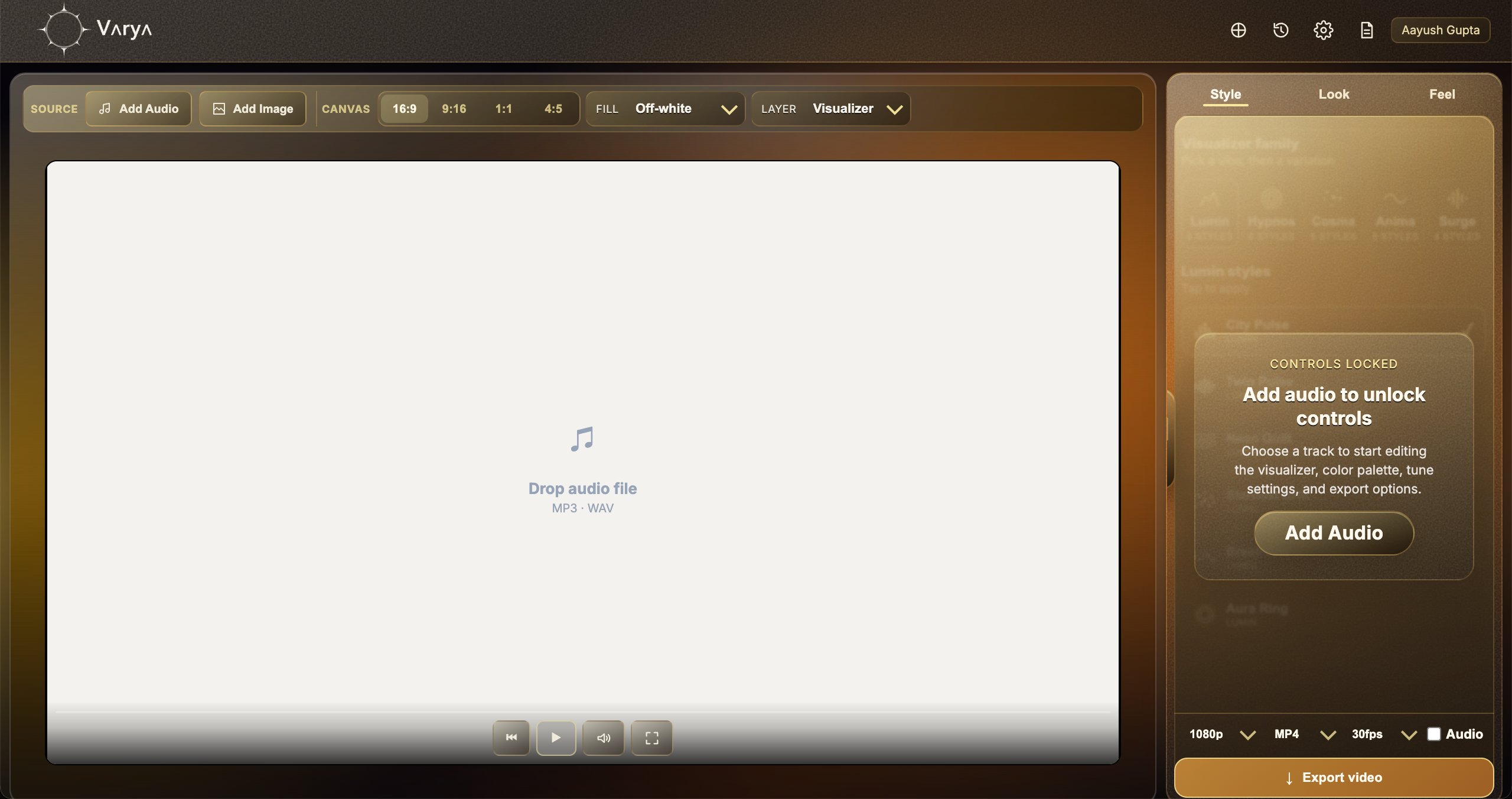
Start by adding your audio track in Varya. The visualizer reacts to the sound, so the track should be the same one used in your edit or at least a version with the same timing. Choose the canvas size based on the final project: 16:9 for horizontal video, 9:16 for vertical edits, 1:1 for square posts, or 4:5 for portrait feeds.
For ProRes transparency, choose the transparent fill or transparent background option in Varya. Do not add a background image if you want the overlay to remain transparent. The visualizer itself should be the only visible element. You can still choose any visualizer color because the alpha channel handles the transparent area; you do not need to force everything to bright colors for Screen mode.
- Choose Transparent fill/background in Varya.
- Do not add a background image for a transparent overlay export.
- Use ProRes when the file needs real alpha transparency.
- Match the canvas size to your After Effects timeline or composition.

Customize the overlay before export
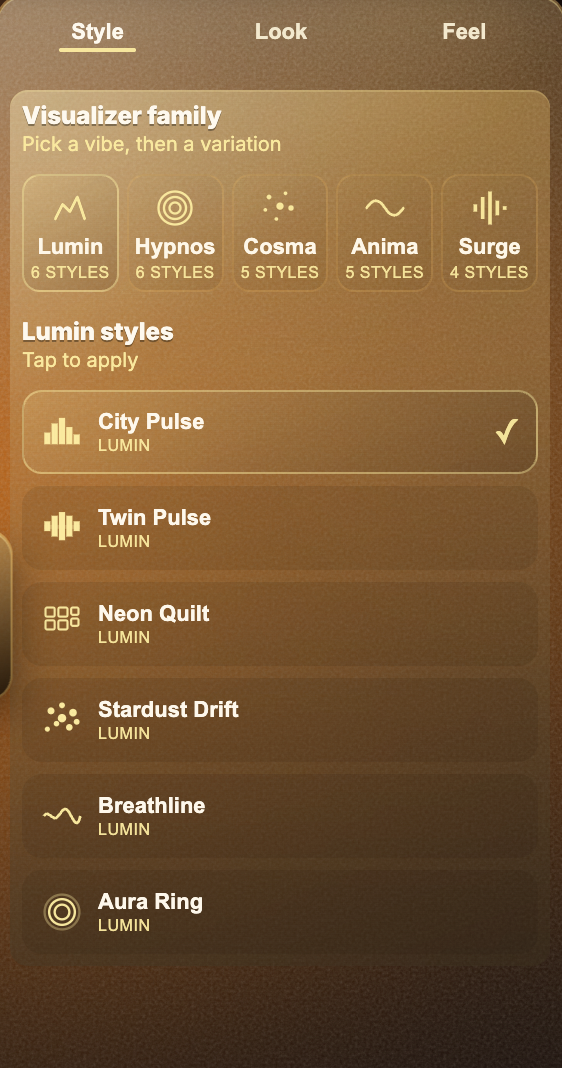
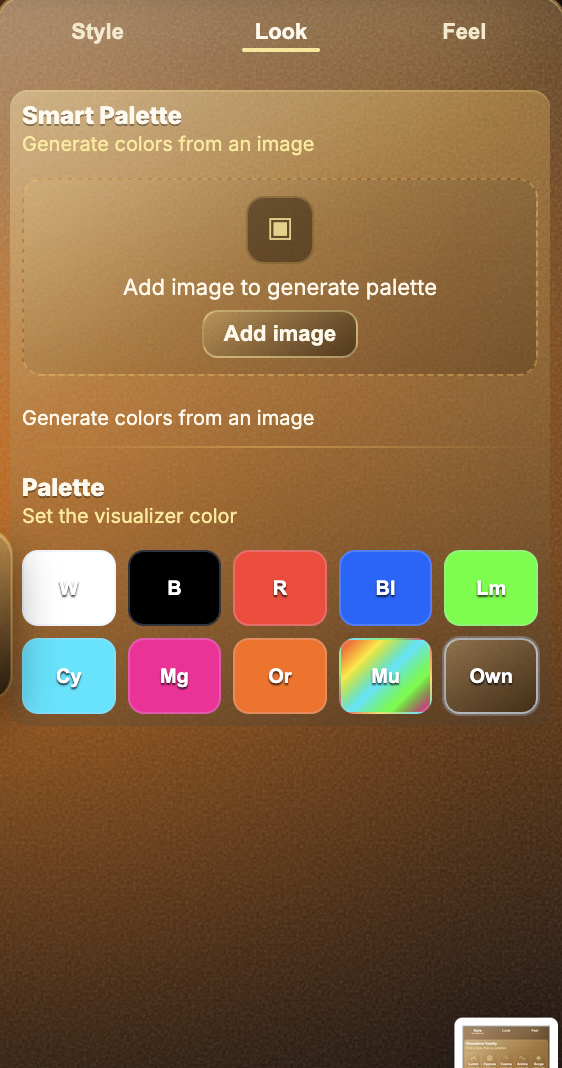
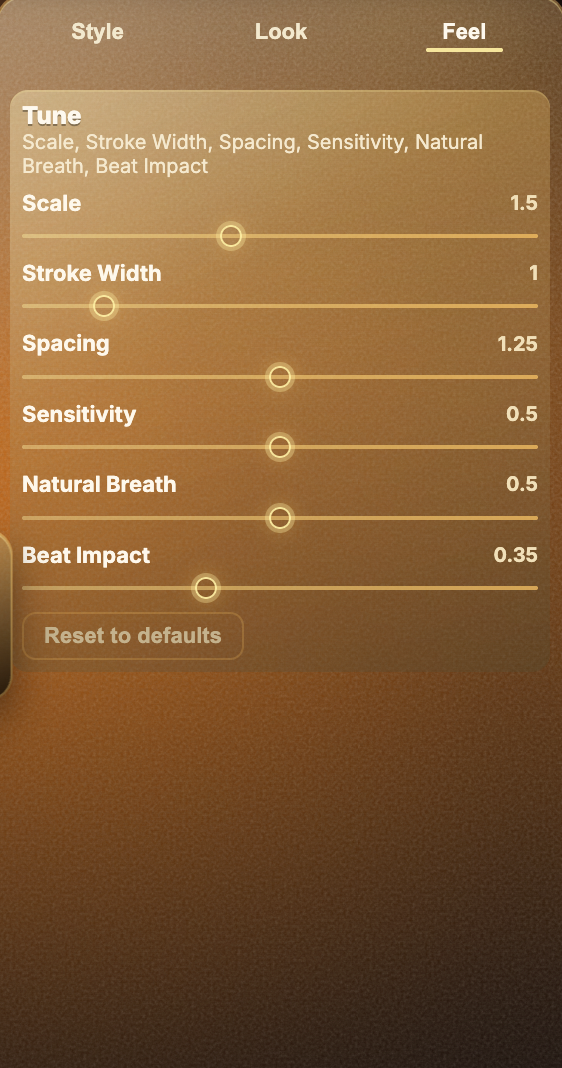
Because ProRes preserves transparency directly, you have more freedom in the design. The visualizer can be bright and sharp, soft and minimal, or subtle enough to sit behind text. Use Style to choose the visual form, Look to control color, and Feel to shape how strongly the audio drives the motion.
If the overlay will sit above busy footage, keep the visualizer clean and avoid excessive density. If it will sit over a simple background, you can push scale, beat impact, and color harder. A useful rule is to preview the visualizer at the size it will appear in the final edit. A style that looks perfect full-screen may be too thin or too busy when placed over a vertical short or a small title card.
Export ProRes from Varya
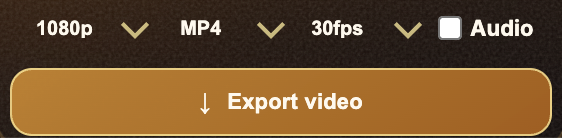
When you are ready, choose ProRes as the export format and keep the transparent fill enabled. If the export panel includes audio, only keep audio on when the overlay file is also meant to carry the song. For a pure overlay that will sit on top of an edit with existing sound, turn audio off to keep the timeline clean.
ProRes exports are heavier, so they may take longer to render and upload. That is normal. The reason to use the format is quality and alpha support, not smallest file size. If you only need a quick social overlay and do not care about real transparency, MP4 plus Screen can be faster.
Place the ProRes layer above footage in the composition
Import the ProRes file and place it above your footage layer in the composition. Keep Mode set to Normal. If After Effects interprets the alpha correctly, the transparent area will disappear immediately and the visualizer will sit directly over the layers below.
If the edge looks wrong, right-click the footage, choose Interpret Footage > Main, and review alpha interpretation. Straight and Premultiplied alpha can produce different edge behavior. Once the alpha looks right, use masks, transforms, opacity, and effects as creative controls rather than transparency fixes.
When ProRes is the better choice
Choose ProRes when the overlay needs clean edges, reusable transparency, or professional compositing. It is especially useful when the visualizer will move between applications, be reused across multiple timelines, or sit over footage that already has a lot of dark detail. Since the transparent area is actual alpha, the result is more predictable than Screen blending.
Choose MP4 instead when you need a smaller file, a faster export, or a simple overlay that is bright on black. The two workflows are both useful, but they solve different problems. MP4 is convenient. ProRes is cleaner and more flexible.
- Use ProRes for true alpha transparency.
- Use Normal blending in the editor.
- Use MP4 plus Screen only when alpha is not required.
- Keep editor-specific alpha interpretation in mind if edges look incorrect.